
Airflow That Clears and Cools Properly
AC Evaporator Repair in Clinton for weak airflow, cabin odors, or inconsistent cooling
Ford Masters Auto Repair handles AC evaporator repair in Clinton when your vehicle's climate control struggles to deliver cold air or produces musty smells through the vents. The evaporator sits behind the dashboard and absorbs heat from cabin air while refrigerant passes through its coil fins, but leaks or moisture buildup prevent that heat transfer from working correctly. Your air may feel damp, smell stale, or never reach the temperature you set even when the compressor runs continuously.
Evaporator problems often trace back to refrigerant leaks at sealed joints or corrosion from trapped moisture that forms when humid air contacts cold metal surfaces. When the evaporator leaks, refrigerant pressure drops and the coil cannot absorb enough heat to cool your cabin air efficiently. Moisture that collects in the evaporator housing creates conditions for mold growth, which produces the odors you smell when you turn on the system.
Schedule a diagnostic inspection to identify refrigerant leaks and evaporator housing conditions affecting your cooling performance.
What Proper Evaporator Repair Requires
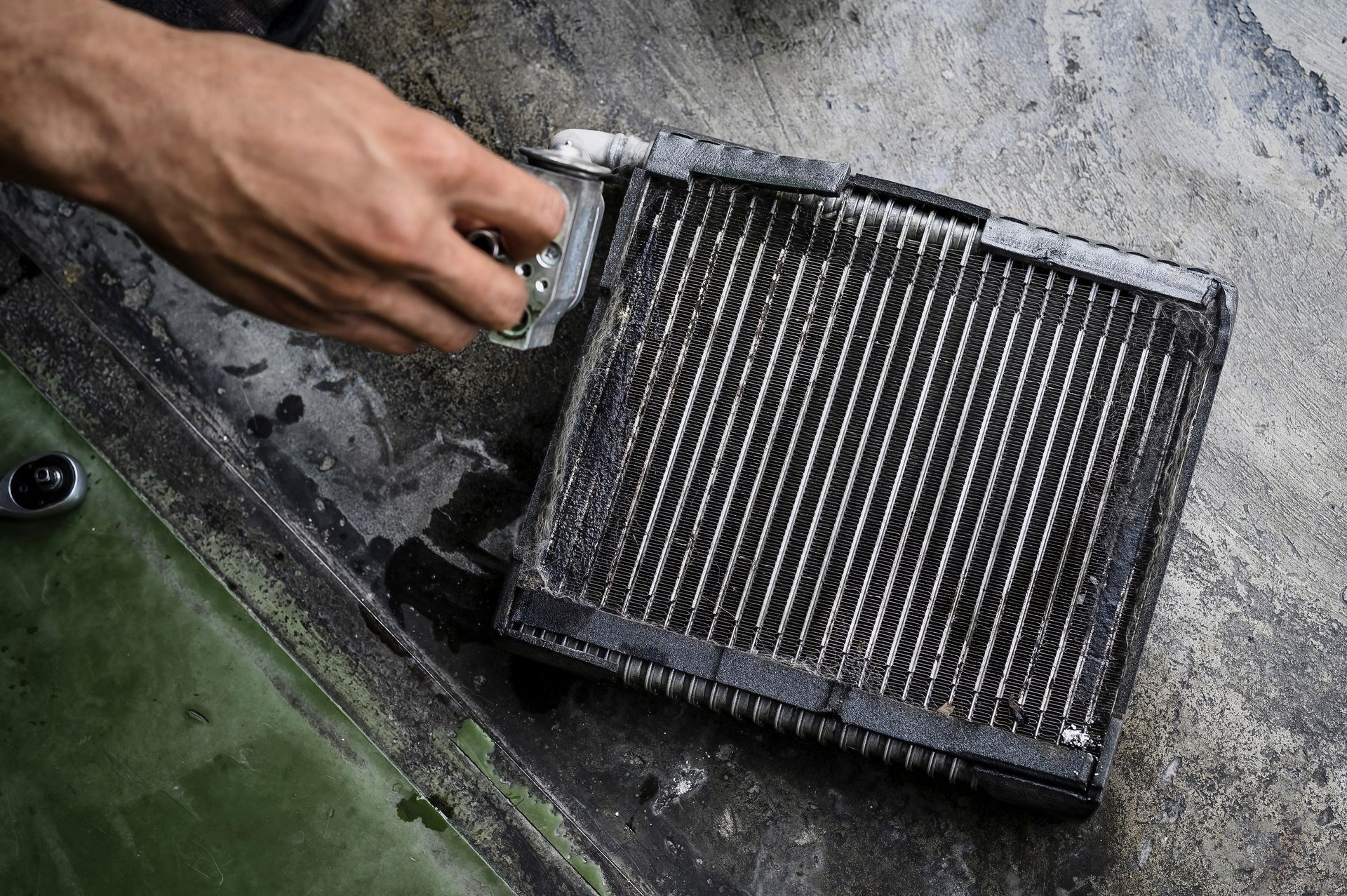
Evaporator repair requires dashboard removal to access the component, followed by pressure testing to confirm leak locations and assess coil integrity. Technicians examine the evaporator fins for corrosion, check drain tube function to verify moisture exits properly, and measure refrigerant pressures before and after repairs to confirm the system holds the correct charge. Repairs may involve sealing small leaks, replacing damaged coil sections, or installing a new evaporator assembly when corrosion has compromised multiple areas.
Once the evaporator functions correctly, you notice air that flows consistently cold across all vents, cabin temperatures that match your thermostat setting, and elimination of musty smells that previously accompanied airflow. The system cycles less frequently because it reaches your desired temperature efficiently rather than running constantly to compensate for inadequate cooling capacity.
Evaporator repairs also address refrigerant circulation throughout the entire AC system, which means the compressor and condenser experience less strain from trying to move refrigerant through a compromised coil. Proper evaporator function prevents moisture accumulation that leads to repeat mold problems and protects other AC components from premature wear caused by incorrect operating pressures.
Questions Property Owners Usually Ask
Evaporator issues affect both cooling capacity and air quality, and understanding what repair involves helps you recognize when your system needs attention.
What causes evaporator leaks in the first place?
Corrosion develops when moisture trapped in the evaporator housing reacts with aluminum coil surfaces, especially in humid climates where condensation forms frequently. Road salt and environmental contaminants that enter through the cabin air filter can accelerate that corrosion over time.
How do technicians confirm the evaporator is actually leaking?
Pressure testing involves evacuating the AC system, introducing nitrogen or refrigerant with tracer dye, and using electronic leak detectors or UV lights to pinpoint where refrigerant escapes from the evaporator coil. Dashboard removal provides direct visual access to inspect coil condition and housing integrity.
Why does the evaporator location make repair more complex?
The evaporator mounts inside the HVAC housing behind the dashboard, which means technicians must remove steering column covers, instrument panels, and connecting ducts to reach the component. That access work accounts for much of the labor time involved in evaporator repairs.
What maintenance prevents future evaporator problems?
Replacing the cabin air filter regularly prevents debris buildup that traps moisture against the evaporator, and running the AC system periodically during cooler months in Clinton keeps refrigerant circulating to prevent seal deterioration from prolonged inactivity.
How will I know when repair work actually fixed the cooling issue?
You should feel air temperature drop to the mid-40s Fahrenheit range at the center vents within a few minutes of starting the system, and cabin temperature should stabilize at your thermostat setting without the compressor cycling excessively or airflow fluctuating between vents.
ord Masters Auto Repair provides detailed evaporator diagnostics that identify whether repair or replacement makes sense based on coil condition and system age. Request an AC performance evaluation to pinpoint what's limiting your vehicle's cooling capacity.